Resumé
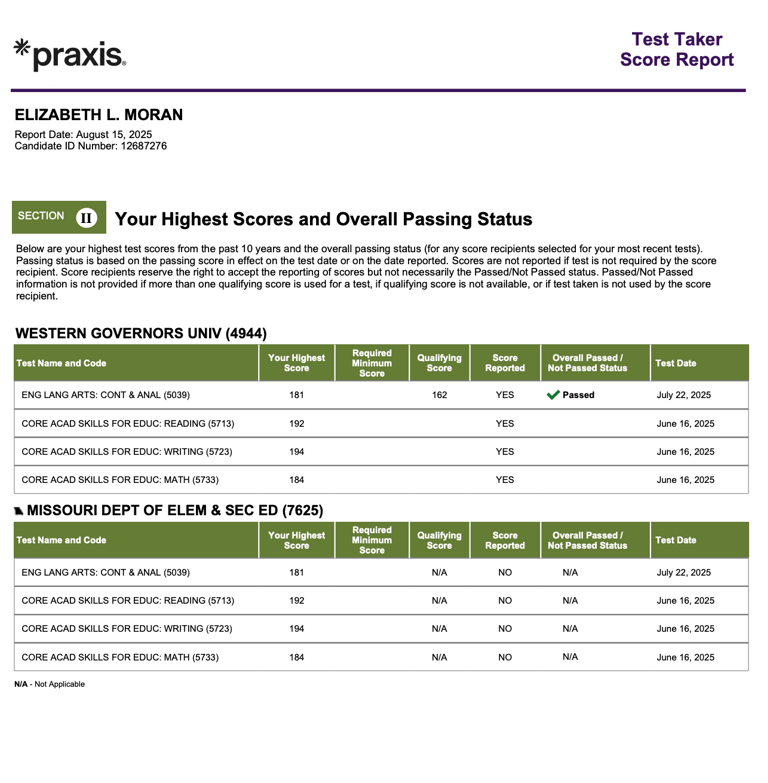
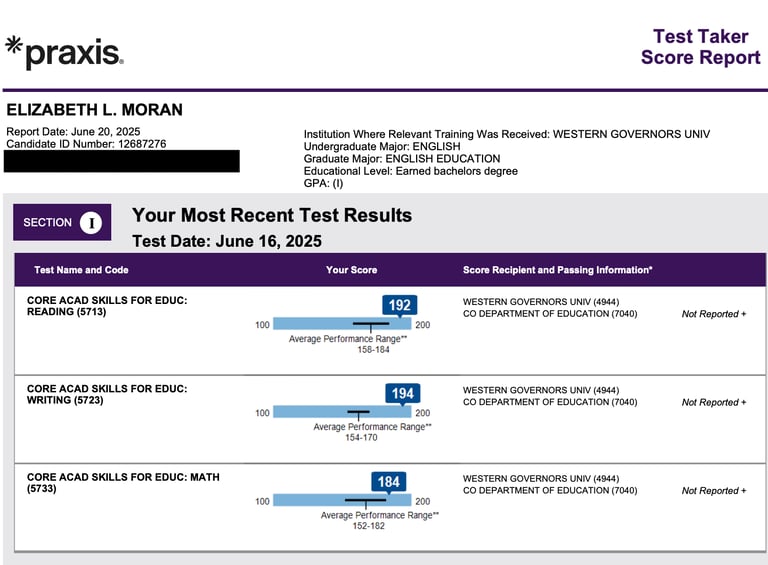
Praxis Scores


Awards
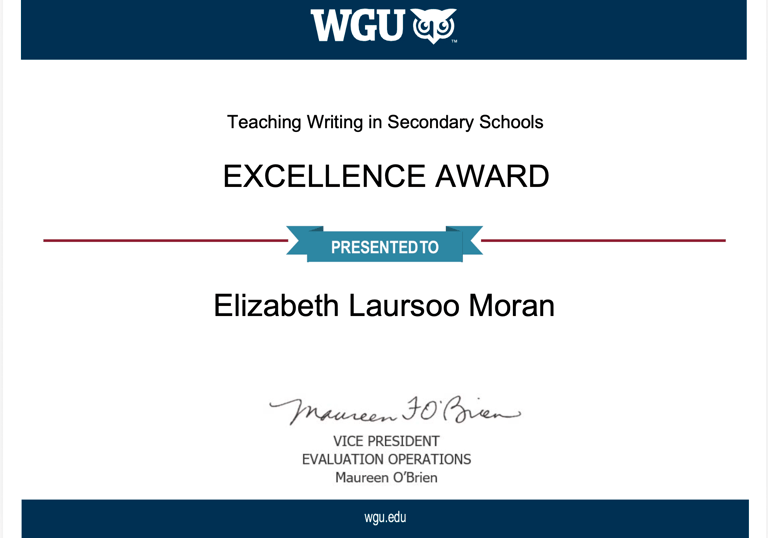
WGU Excellence Award | 2025
Evaluator's Comments:
“The lesson plan on writing instruction was exemplary because of its instructional strategies and engaging learning tasks for teaching students how to write a thesis statement. For example, mentor texts were utilized to show concrete examples of well-crafted and opportunistic thesis statements. Also, time was taken during instruction to dissect the language and elements used to craft the thesis statement.”
To view the full lesson plan that received this award, click below:
My Skills
Writing & Analytical Expertise


B.A. in English Literature


Instructional & Pedagogical Skills
Master's Program in Secondary Education
Technology, Communication, and Organization
Digital & Professional Competencies
Advanced academic, analytical, and creative writing across multiple genres
Close reading and textual analysis of complex literary and informational texts
Research synthesis and evidence-based argumentation
Clear, audience-focused writing for academic, professional, and instructional contexts
Editing and revision for clarity, coherence, and stylistic precision
MLA citation and formatting; academic integrity and source evaluation
Rhetorical analysis and persuasive writing strategies
Differentiating tone for varied audiences and purposes
Written feedback and commentary that is constructive, specific, and actionable
Standards-aligned lesson planning and unit design
Backward design and learning objective development
Instructional scaffolding to support diverse learners
Bloom's Taxonomy application for cognitive rigor and skill progression
Differentiated instruction for varied learning styles and abilities
Formative and summative assessment design and analysis
Data-driven instructional decision-making
Classroom management and student-engagement strategies
Disciplinary literacy strategies for secondary English classrooms
Explicit instruction in reading, writing, speaking, and listening skills
Feedback practices that promote revision, growth, and metacognition
Inclusive and culturally responsive teaching practices
Alignment of instruction, assessment, and learning outcomes
High digital literacy and adaptability to new platforms
Google Workspace (Docs, Slides, Sheets, Forms, Drive)
Learning Management Systems (Canvas, Google Classroom, and similar platforms)
Microsoft Word and document formatting for professional and academic use
Email communication with students, families, colleagues, and administrators
Online grading, feedback, and rubric-based assessment tools
Virtual collaboration and remote instruction technologies
Organization and time management in fast-based, deadline-driven environments
Professional communication in both synchronous and asynchronous settings
File management, document sharing, and version control
Attention to detail in written communication and digital submissions
Contact me
Feel free to reach out anytime!
PHONE
elizabethlgmoran@gmail.com
(303) 551-2284
© 2025. All rights reserved.